GODS’ Abode - Airoli
GODS’ Heaven - Sangharsh Nagar, Powai
Recommended Age Group
Children with special needs in the age group of 2 to 11 years
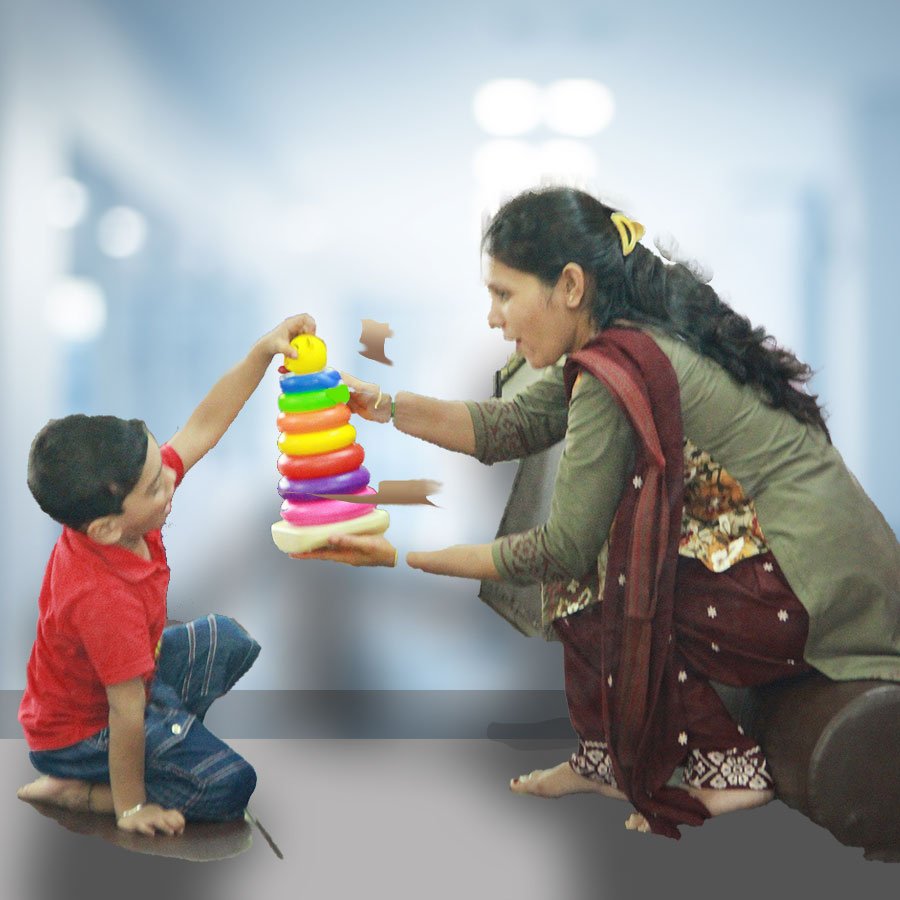
A multidisciplinary team of special educators, occupational therapists, physiotherapists, speech therapists, social workers and counselors conducts detailed assessments to identify each child's developmental needs.
Parents are also counselled on the significance of early intervention in promoting their child's holistic growth and development.
The programme focuses on developing self-help and daily living skills, eye-hand coordination, sitting tolerance, gross and fine motor skills, communication and language abilities and social interaction through structured play therapy and group activities. Therapeutic interventions, including occupational therapy, physiotherapy, and speech therapy, are integrated with special education to ensure comprehensive support.
Regular parent counselling and guidance are also provided to encourage active family participation in the child's developmental journey.
Activities of daily living are taught, such as eating independently, washing hands, personal hygiene and cleanliness and dressing up among others. Special educators also teach identifying pictures, number counting, counting objects, color matching and identifying colors.
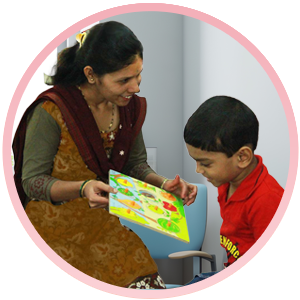
Through individualized interventions and continuous therapeutic support, children demonstrate greater independence in daily activities, improved participation in learning and social settings and a stronger foundation for future education and rehabilitation.
The programme also empowers parents with the knowledge and skills needed to support their child's progress effectively at home.
Recommended Age Group
Children with special needs in the age group of 11 to 18 years.
It provides skills such as basic work habits, social communication, and social and life skills. The programme aims to build self-confidence, improve independence, and strengthen practical skills.
The goals are customised to each student's abilities and interests, with the aim of helping them become independent in their lives.
Skills such as identifying pictures of fruits, vegetables, animals, birds, places, etc., naming them and understanding their use in daily life.
The children are taught to say their own name, school name, home address and greet people. Numbers and alphabets are also taught orally with visuals, articles, reading and writing activities.
The process is slow as per the capacity of the child to cope.
The multi-sensory approach integrates various sensory inputs to enhance learning and development.
This method engages multiple senses, such as sight, sound, touch, and movement, to improve cognitive, emotional, and motor skills.
It is particularly beneficial for children with sensory processing issues or learning difficulties, such as autism, and those who are intellectually challenged in other ways.
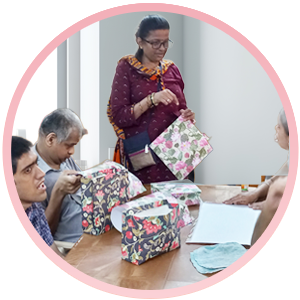
Training in foundational vocational skills such as cutting, pasting, folding, sequencing, and stringing beads to build fine motor coordination, focus, and work readiness.
Physical activity is crucial for maintaining overall health and vitality. Our sports activities program aims to provide trainees with opportunities for physical fitness, social interaction, and skill-building. Exercises are tailored to the trainees' capacities, including breathing exercises, yoga, and stretching exercises to enhance muscular movement and flexibility.
Periodical reviews and meetings with parents are conducted to see the improvements or otherwise, so that any course correction required can be effected immediately.
Every occasion - national, religious and cultural- is celebrated with our beneficiaries, giving them opportunities to participate, socialise and enjoy themselves.
Outings to gardens, picnics and cinemas, along with our annual Founders’ Day celebrations and various awareness programmes, provide a platform for them to showcase their talents, build confidence and experience the joy of being part of the community.
Adolescents with special needs acquire functional life skills, social competence, work readiness, and self-confidence, enabling them to become more independent in their daily lives and better prepared for vocational training, employment and community participation, in addition to guiding their families on the way forward for their personal growth and development.